Vet-Founded • Trusted by 950K+ Frenchie Lovers • Every Order Helps a Rescue Pup 🐾
Vet-Founded • Trusted by 950K+ Frenchie Lovers • Every Order Helps a Rescue Pup 🐾
Vet-Founded • Trusted by 950K+ Frenchie Lovers • Every Order Helps a Rescue Pup 🐾
Vet-Founded • Trusted by 950K+ Frenchie Lovers • Every Order Helps a Rescue Pup 🐾
Vet-Founded • Trusted by 950K+ Frenchie Lovers • Every Order Helps a Rescue Pup 🐾
Vet-Founded • Trusted by 950K+ Frenchie Lovers • Every Order Helps a Rescue Pup 🐾
Vet-Founded • Trusted by 950K+ Frenchie Lovers • Every Order Helps a Rescue Pup 🐾
Vet-Founded • Trusted by 950K+ Frenchie Lovers • Every Order Helps a Rescue Pup 🐾
If you love French Bulldogs but want something a little different, you may have heard of the fluffy Frenchie. I get why they catch your eye. Their longer, soft coat gives them a fuller look, especially around the ears and neck.
A fluffy Frenchie is a French Bulldog with a rare long‑hair gene that gives it a slightly longer, softer coat than the standard short‑haired breed. They are not a separate breed. They are still French Bulldogs in size, build, and personality.
When I look at a fluffy Frenchie puppy, I see the same playful and loyal nature people love in Frenchies, just with extra grooming needs and often a higher price tag. If you want to know how they get that coat, what they are like as pets, and what to expect before bringing one home, you are in the right place.
I see a Fluffy Frenchie as a purebred French Bulldog with a rare long‑hair gene that gives it a soft, longer coat. When people ask me how much is a Fluffy Frenchie, I tell them most puppies cost $5,000 to $16,000, depending on breeder reputation, color, and bloodline, as noted by Dog Academy’s Fluffy Frenchie guide.
Fluffy Frenchies are just French Bulldogs with a rare long-hair gene, making their coats two or three times longer than the usual Frenchie.
They need weekly brushing and regular grooming, but their personality and exercise needs match those of short-haired Frenchies.
The AKC doesn’t recognize Fluffy French Bulldogs in conformation shows since their coats don’t meet the breed standard for being short and smooth.
A Fluffy Frenchie is a purebred French Bulldog — not a designer dog or a mix — just a Frenchie with a rare genetic surprise.
Standard colors typically start around $10,000–$13,000, with rare colors pushing well above $20,000. Annual care runs over $1,000 a year.
Brush them two or three times a week to keep their longer coat from matting.
Both parents need to carry the LH gene to produce a Long Haired French Bulldog, which makes them rare.
They have the same health concerns as short-haired Frenchies, like breathing challenges and heat sensitivity.
Bathe them every 4–6 weeks with products made for sensitive skin and fur.
With good care, their lifespan is about 10 to 14 years.
Buying a puppy: $10,000–$20,000+ depending on color
Grooming each month: $50–$100
Total cost of ownership: $15,000–$25,000
Fluffy Frenchie in black color
When I look for a fluffy Frenchie puppy, I focus on health testing, clear contracts, and honest breeders. I plan for ongoing costs too. Vet visits, quality food, grooming tools, and possible airway care can add up over time.
About 20–30% of French Bulldogs have breathing issues because of their flat faces. Heat intolerance is a real concern, so you’ll need to keep your Fluffy French Bulldog cool all year. The extra fur doesn’t protect them from the usual Frenchie health problems, unfortunately.
Weight
16 – 28 lbs
Height
11 – 13 inches
Coat type
Medium-length, soft & plush
Grooming needs
High — brush 3–4x per week
Shedding
Moderate (more than standard Frenchie)
Temperament
Affectionate, playful, calm
Good with kids
Excellent
Good with other animals
Very good (with early socialization)
Energy level
Low to moderate
Easy to train
Moderate (patient & stubborn streak)
Barking habits
Low
Lifespan
10 – 14 years
Definition and Breed Overview
When I talk about a fluffy Frenchie, I mean a long-haired French bulldog that carries two copies of a recessive long‑hair gene. This gene, often linked to the FGF5 mutation, gives the dog a soft, longer coat around the ears, chest, and neck.
According to this guide on what makes a Fluffy French Bulldog different, the long coat comes from a recessive LH gene. Both parents must carry the gene for a fluffy Frenchie puppy to have longer hair.
Aside from coat length, a fluffy French bulldog is still a purebred French bulldog. The body stays compact and muscular. Most weigh between 16 and 30 pounds and stand about 11 to 12 inches tall.
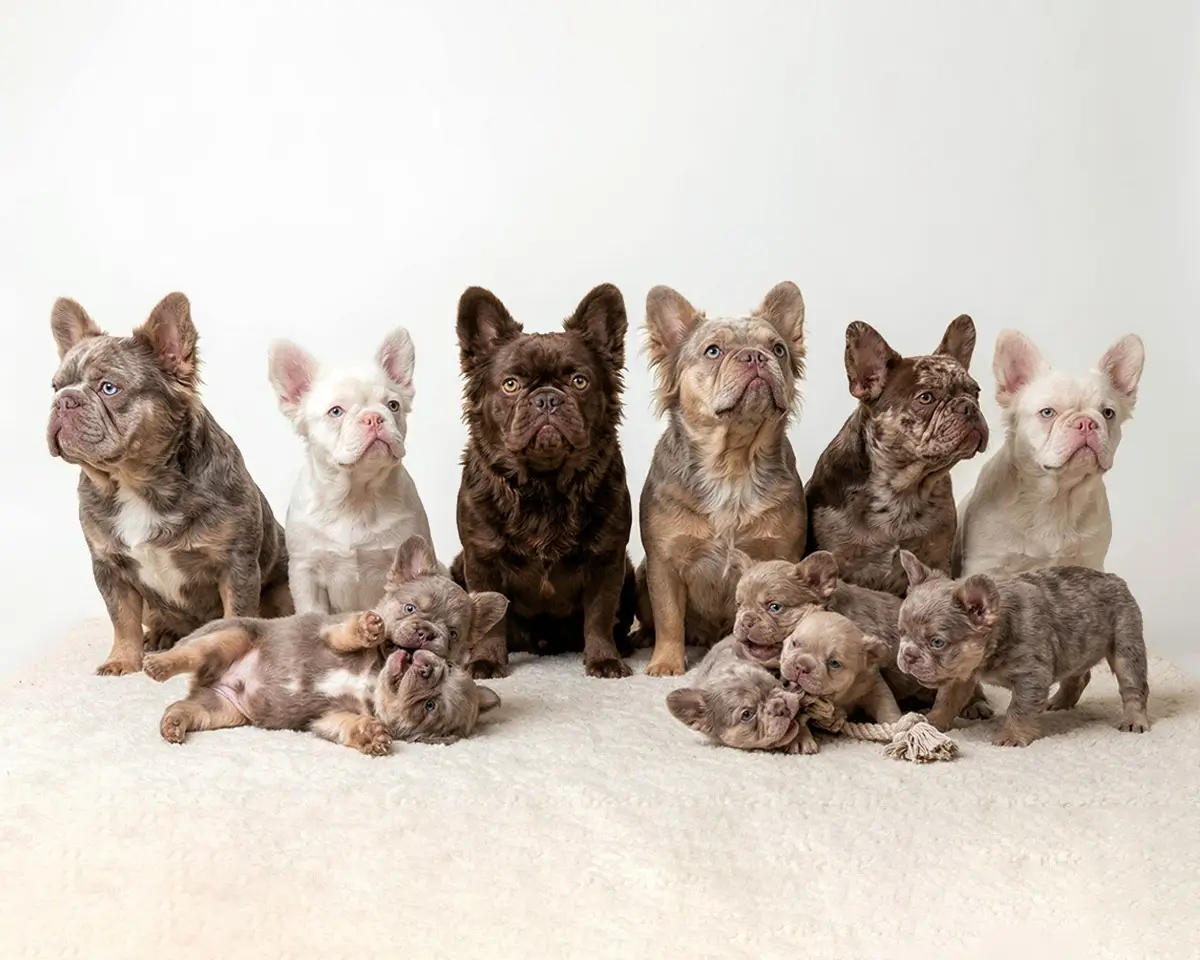
I also notice that fluffy Frenchies come in the same colors as standard Frenchies, including cream, brindle, fawn, and merle. The coat is longer, but the structure, head shape, and bat ears remain the same.
Fluffy Frenchie vs. Standard French Bulldog
The biggest difference I point out is the coat. A standard French bulldog has short, smooth hair. A long-haired Frenchie has visibly longer fur, especially around the ears and neck.
Physical Differences:
Coat Length: Fluffy Frenchies have medium-length fur, while standard Frenchies have short, smooth coats.
Grooming Needs: You’ll need to brush your Long Haired French Bulldog a few times a week, unlike the occasional brushing a regular Frenchie needs.
Appearance: Fluffy French Bulldogs look softer and more plush — especially around their face and ears.
What they share:
Both types have the same body structure and size.
They share the same temperament: social, affectionate, and pretty chill.
Health concerns are pretty much the same for both types.
Neither barks a lot unless something really sets them off.
Everything else stays very similar:
Trait
Fluffy Frenchie
Standard French Bulldog
Coat
Medium to long
Short and smooth
Size
16–30 lbs
16–28 lbs
Body
Compact, muscular
Compact, muscular
Temperament
Friendly, social
Friendly, social
I treat them the same in terms of personality. Fluffy Frenchies share the same social and people‑focused nature described in this overview of the fluffy Frenchie personality. They enjoy human contact and usually adapt well to apartment life.
The coat does require more brushing. I plan weekly grooming to prevent tangles, which I do not need as often with a short‑haired Frenchie. The biggest difference is just how they look. A fluffy Frenchie puppy acts just like any other French Bulldog — loving, goofy, and completely irresistible.
Common Misconceptions
Many people tell me a fluffy French bulldog is not a real French bulldog. That is incorrect. A long-haired French bulldog is still a purebred French bulldog if it comes from registered parents.
Another myth I hear is that fluffy Frenchies are a separate breed. They are not. They are simply Frenchies with a recessive long‑coat gene. As explained in this article about the long-haired Frenchie gene mutation, the extra fur comes from a genetic change, not crossbreeding.
Some also assume a fluffy Frenchie puppy is healthier because of the longer coat. Coat length does not remove common French bulldog health risks, such as breathing issues linked to their flat faces.
When I choose a fluffy Frenchie, I focus on health testing and responsible breeding, not just the coat.
Myth: Fluffy Frenchies are mixed breeds
Lots of people think long-haired French Bulldogs must be part Pomeranian or some other fluffy breed. Not true. A Fluffy Frenchie is a purebred Frenchie — the long coat comes entirely from a recessive gene inherited from both parents.
Myth: They’re a new designer breed
The fluffy gene has always existed in Frenchies, but breeders used to avoid it. Only recently have these dogs become so popular, largely thanks to social media.
Myth: They need totally different care
Caring for a Fluffy French Bulldog is almost the same as for a regular one. The main difference is you’ll need to brush them more often to prevent mats. Exercise, diet, and health checks? All the same as their short-haired siblings.
The Fluffy Gene and Coat Phenotype
Long-haired Frenchies owe their unique coats to a specific recessive gene that both parents must carry. This gene changes the texture and length of their fur but doesn’t affect their purebred status.
I will explain how the LH gene works, how breeders produce long-haired French Bulldogs, and how kennel clubs view this coat type.
Chocolate Fluffy Frenchie
Genetics of the LH (Long-Haired) Gene
The fluffy gene is called the LH (long-haired) gene. Scientists also link it to a change in the FGF5 gene, which controls hair growth cycles. When this gene works differently, hair grows longer than normal.
French Bulldogs usually carry a dominant short-hair gene. The long-haired gene is recessive. That means a puppy must inherit two copies of the LH gene (Lh/Lh) to have a fluffy coat.
Here is a simple breakdown:
Genetic Pair
Coat Result
SH/SH
Short coat
SH/LH
Short coat (carrier)
LH/LH
Fluffy coat
Carriers look like standard Frenchies. They do not show long hair, but they can pass the fluffy gene to their puppies.
Several breed guides explain that a Fluffy Frenchie is a purebred dog with two copies of the recessive long-hair gene, as described in this Fluffy French Bulldog DNA overview.
How Fluffy Coats Occur in French Bulldogs
Fluffy coats appear when both parents pass down the LH gene. If I breed two carriers (SH/LH), each puppy has:
25% chance of LH/LH (fluffy)
50% chance of SH/LH (carrier)
25% chance of SH/SH (non-carrier)
This pattern follows basic recessive inheritance.
Long-haired French Bulldogs are not mixed breeds. The coat change does not alter bone structure, ear shape, or body type. Most fluffy Frenchie puppies still have the same compact build and bat ears as any purebred French Bulldog.
Some breeders focus on producing fluffy litters on purpose. Others may see an occasional long-haired puppy appear in standard lines if both parents quietly carry the gene. I always look for health testing first, since coat length does not affect core breed health.
AKC Registration and Breed Standards
The American Kennel Club (AKC) recognizes the French Bulldog as a breed. However, the official breed standard calls for a short, smooth coat.
A fluffy French Bulldog can still qualify as a purebred French Bulldog if its parents are registered. The coat length alone does not remove its pedigree. The AKC simply considers the long coat a fault in conformation shows.
Some breed guides note that Fluffy Frenchies remain genetically French Bulldogs even if their coat falls outside the show standard, as explained in this Fluffy French Bulldogs: Are They Purebred? guide.
In everyday life, coat length does not change temperament. A fluffy Frenchie puppy behaves like any other Frenchie. The difference is visual, not structural or behavioral.
Appearance and Unique Physical Characteristics
When I look at a fluffy Frenchie, the coat stands out first. The longer hair, color patterns, and compact body shape set this dog apart from the standard French Bulldog.
Coat Length, Texture, and Grooming Needs
The biggest difference I see in a fluffy French bulldog is the coat length. Unlike the short, smooth coat of most Frenchies, a long-haired French bulldog has medium to long fur around the ears, chest, legs, and tail area. The hair often looks fuller around the neck and gives a soft, feathered look.
The texture feels soft and slightly wavy, not thick like a Husky. This longer coat comes from the LH (long hair) gene, which makes long-haired French bulldogs possible while keeping them purebred.
A fluffy Frenchie puppy often looks extra fuzzy. The ears may have longer fringes, and the coat can appear puffier during puppy growth stages.
For grooming, I brush my dog 2–3 times a week to prevent tangles and loose hair buildup. I also:
Check behind the ears for knots
Keep the skin folds clean and dry
Bathe only when needed to avoid dry skin
The coat sheds lightly to moderately. Regular brushing keeps it under control.
Notable Colors and Markings
I notice that fluffy Frenchies come in many of the same colors as standard French Bulldogs. Common colors include:
A fluffy Frenchie puppy may change shade slightly as it grows. For example, a lighter fawn coat can deepen over time. Markings often include white patches on the chest, face blazes, or piebald patterns.
Color does not change the dog’s structure or coat length. It only affects appearance.
Size and Body Structure
Even with the longer coat, the fluffy French bulldog keeps the same compact build as other Frenchies. I see a small, muscular body with a wide chest and short legs.
Most adults weigh between 16 and 28 pounds. The height usually stays under 13 inches at the shoulder. The long hair does not make the dog larger; it only creates a fuller look.
The head remains square with a short muzzle. Large, upright “bat ears” stand out even more on a long-haired French bulldog because of the added fur around the edges.
A fluffy Frenchie puppy looks stocky early on. As it grows, the body stays sturdy and balanced. The longer coat adds softness to the outline, but the strong structure underneath stays the same.
Most Fluffy French Bulldogs have darker coats, but lighter ones exist too. The same color patterns you see in standard Frenchies — brindle, pied, and solid — show up in fluffy versions as well.
Fluffy Frenchie Care Tips
Caring for a Long Haired French Bulldog isn’t complicated, but you do need to stay on top of their coat. We recommend brushing two or three times a week — daily if you want to stay ahead of tangles and mats.
Bathe them every 4–6 weeks with a gentle, dog-friendly shampoo. Their fluffy fur holds onto dirt and debris more than a short-haired Frenchie, so check for knots and clean their paws and ears after walks.
Beyond grooming, don’t forget the essentials: a high-quality diet, moderate exercise, and regular vet visits. A good harness protects their delicate neck on walks, and an orthopedic bed supports their joints — both worth investing in.
One thing you’ll notice quickly — tear stains are far more visible on Fluffy Frenchies, and those spots can get inflamed if you ignore them. We use and recommend our French Bulldog Tear Stain Remover. Just apply it to a cotton pad and gently wipe when you spot stains. Find out more and SHOP HERE.
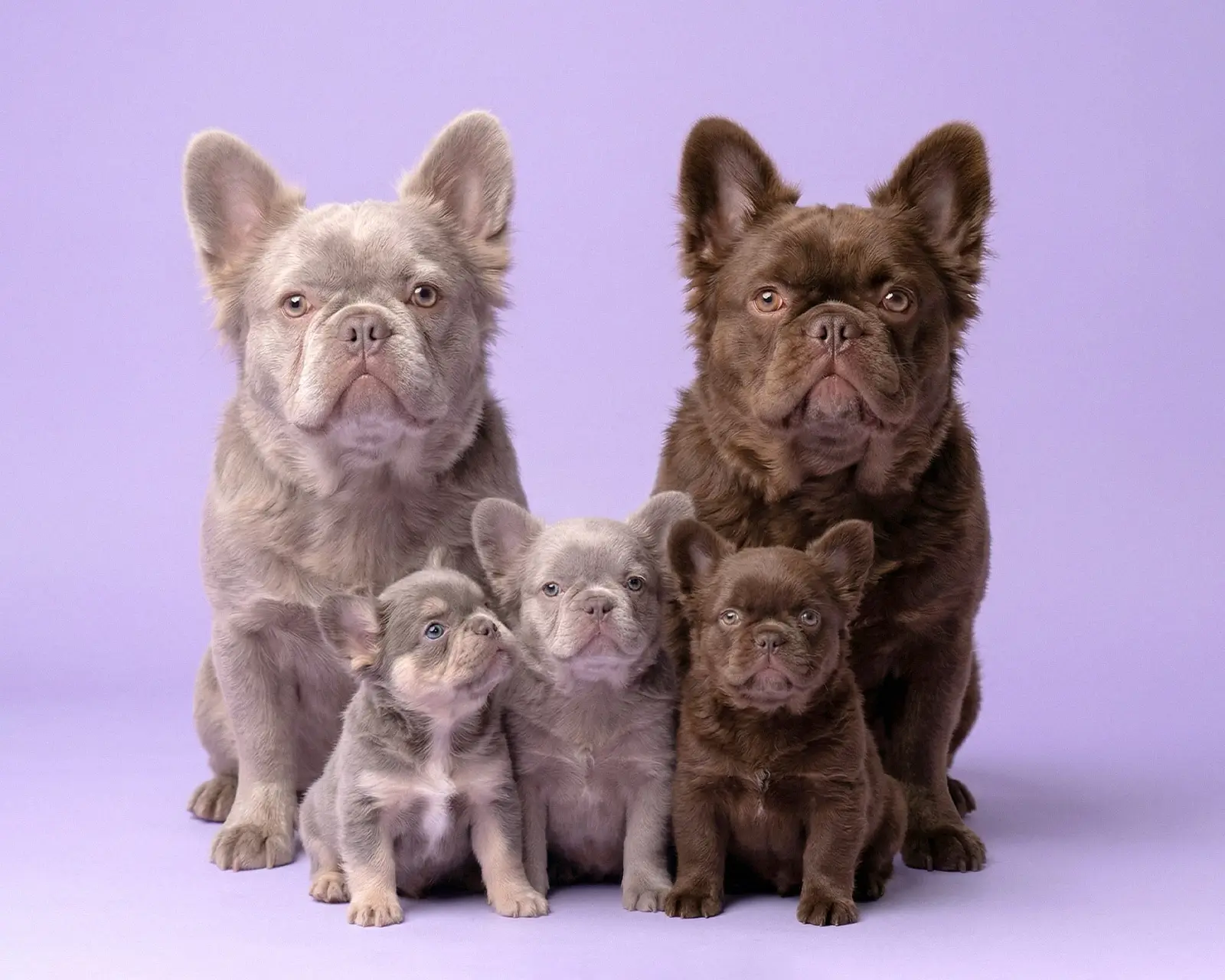
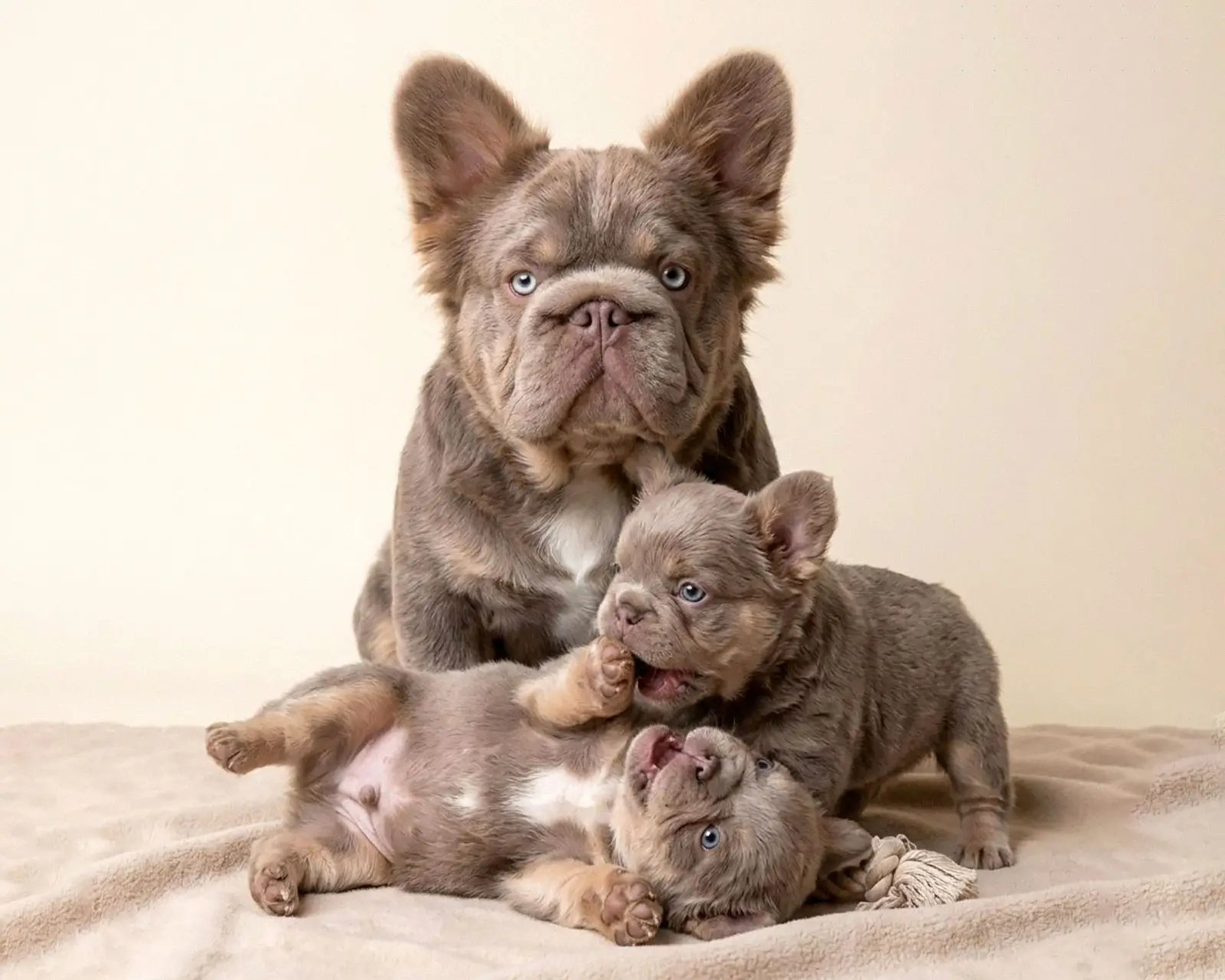
Lilac and brown Fluffy Frenchies with puppies
Temperament, Personality, and Suitability as Pets
Fluffy Frenchies have the same calm, affectionate vibe as regular French Bulldogs. They’re fantastic companions for a wide range of living situations — apartments, families, singles, you name it.
Temperament of Fluffy Frenchies
I see the fluffy French bulldog share the same core personality as the standard French bulldog. The long coat does not change behavior. These dogs bond closely with me and often follow me from room to room.
Most fluffy Frenchies stay quiet. According to this guide on the fluffy frenchie personality, they do not bark much unless something triggers them. I like this trait in apartments or shared housing.
I notice three strong traits in almost every fluffy Frenchie puppy:
Affectionate – enjoys lap time and close contact
Alert – pays attention to new sounds
Playful – loves short bursts of games
They also show a stubborn streak. If I push too hard, they resist. When I stay patient and consistent, they respond much better.
Family Compatibility and Lifestyle Fit
I recommend the fluffy French bulldog for people who want a close companion, not a high‑energy running partner. This breed prefers short walks and indoor play over long hikes.
They usually do well with children when I supervise and teach gentle handling. Their small, sturdy build helps, but rough play can still cause injury. I always set clear rules for both the dog and the child.
Many fluffy Frenchies get along with other pets. The complete Fluffy French Bulldog care guide notes that they are 100% purebred Frenchies with similar social traits. I find they often accept other dogs and even cats if I introduce them slowly.
This breed fits well in:
Apartments
Small homes
Households where someone stays home often
They do not handle long hours alone very well. I see signs of stress when owners leave them isolated for most of the day.
Socialization and Training
I start training a fluffy Frenchie puppy early. Short sessions work best. Five to ten minutes at a time keeps their focus.
I rely on positive reinforcement. Treats, praise, and calm repetition build trust. Harsh methods shut them down or make them stubborn.
Early socialization matters. I expose my Frenchie to:
New people
Friendly dogs
Common sounds like vacuums and traffic
This helps prevent fear later.
House training can take patience. The fluffy French bulldog sometimes matures slowly in this area. I keep a steady routine with set potty times and clear rewards.
With steady guidance, I get a loyal, social, and well‑mannered companion that thrives in close daily life.
Health, Care, and Lifespan of Fluffy Frenchies
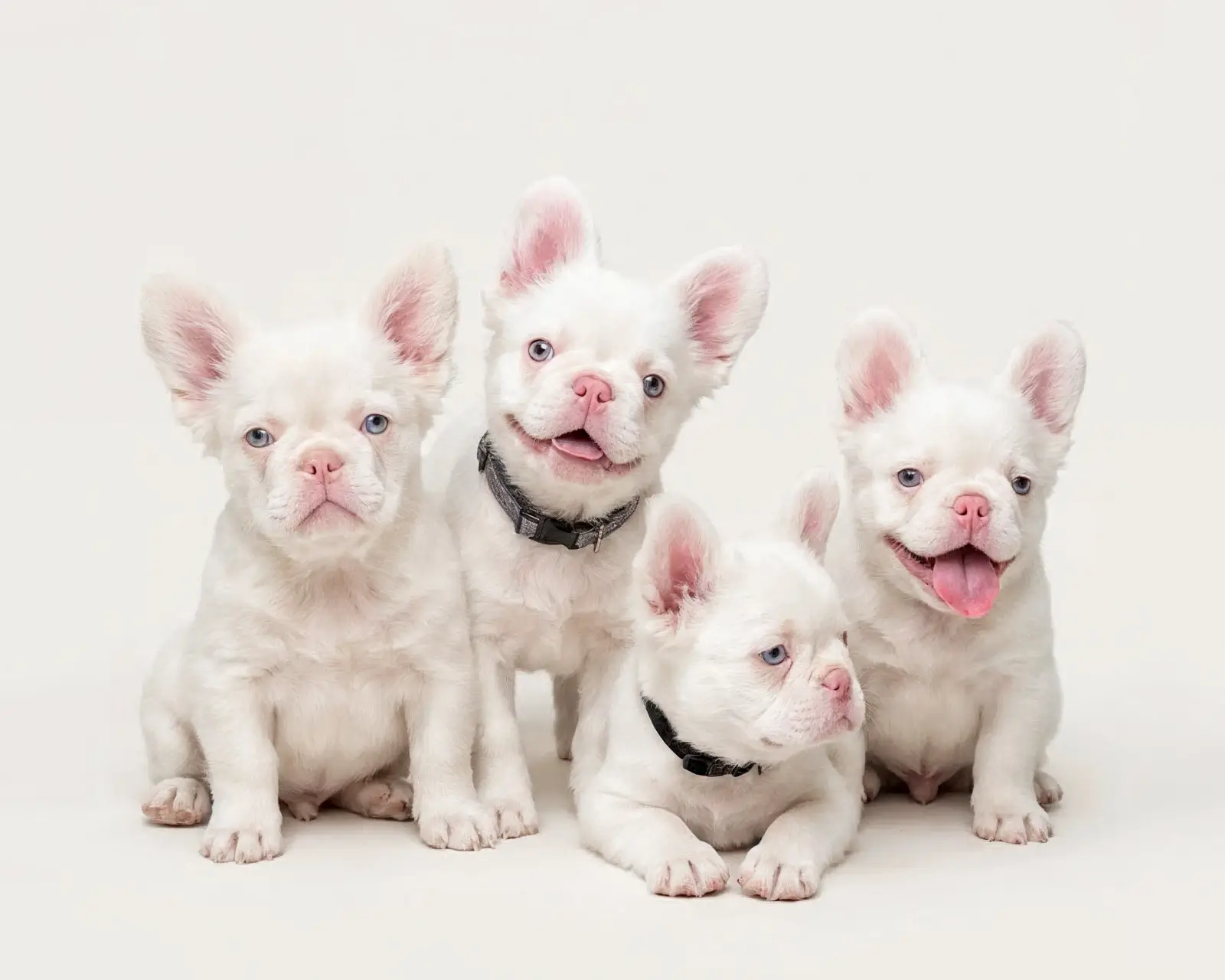
Fluffy Frenchie puppies in fluffy Pink color variation
Fluffy Frenchies share most of the same health concerns as standard French Bulldogs. Breathing issues are a big one, and their longer coats add grooming needs on top of that. With good care, they can live 10–14 years — not bad for a breed with a few built-in quirks.
Because of their compact build, they’re prone to intervertebral disc disease (IVDD), which affects the spine. Hip dysplasia shows up often too — you’ll notice limping or difficulty standing if it develops.
Regular vet checkups are essential for catching issues early. Clean their facial wrinkles daily with a damp cloth and dry them well — if moisture gets trapped, skin fold infections can develop fast.
Many Fluffy Frenchies also have food sensitivities. Chicken, beef, and grains are common triggers. If you notice itching or digestive issues, a limited-ingredient diet is worth trying.
Brachycephalic Airway Obstruction Syndrome
Brachycephalic airway obstruction syndrome is a real concern for Fluffy Frenchies because of their flat faces. It makes breathing harder, especially during activity or in warm weather.
You’ll hear snoring, snorting, or wheezing — and while those sounds are endearing, they’re also signs of restricted airways. If your dog gags frequently or struggles to catch their breath, that’s a red flag.
When I look at fluffy Frenchie health, I focus on breathing, skin care, grooming needs, and realistic life expectancy. These dogs need steady care, especially when they are fluffy Frenchie puppies.
With good Fuzzy French Bulldog care, they typically live 10–14 years. Genetics, diet, and how well you manage their health all play a role.
Dogs from health-tested parents tend to live longer, so always ask breeders about health screenings before committing. Once your Fluffy Frenchie hits seven, we recommend switching to vet checkups every six months. Catching things early genuinely makes a difference.
Keep your dog at a healthy weight. Obesity makes breathing problems significantly worse and shortens their life — measure meals and avoid free-feeding.
Common Health Issues
I watch closely for the same problems seen in standard French Bulldogs. A fluffy French bulldog may deal with skin fold infections, ear infections, food allergies, and joint issues like hip dysplasia.
Their long coat does not protect them from skin trouble. In fact, trapped moisture can make irritation worse if I do not dry them well after baths.
I also pay attention to:
Red or itchy skin
Frequent head shaking
Scooting or licking paws
Limping or stiffness
Regular vet visits matter. Responsible breeding and routine care both play a role in long-term health, as explained in this guide on the lifespan of a Fluffy Frenchie.
When I bring home fluffy Frenchie puppies, I schedule early checkups. Early care helps catch problems before they grow.
Brachycephalic Airway Obstruction Syndrome
The flat face that makes this breed so popular also causes risk. Many French Bulldogs develop brachycephalic airway obstruction syndrome, which limits airflow.
I look for loud snoring, gagging, or heavy breathing after mild activity. Heat makes symptoms worse. Even a short walk on a warm day can stress their airway.
I manage this risk by:
Keeping my home cool
Avoiding long exercise sessions
Using a harness instead of a neck collar
Watching weight closely
Extra weight puts more pressure on the airway. If breathing becomes severe, a vet may suggest surgery.
Fluffy Frenchies are not built for endurance. I plan short, calm activities instead of intense play.
Genetics, weight control, and daily care strongly affect those years. I keep meals measured and avoid free feeding.
Quality of life matters as much as length. I focus on:
Healthy body weight
Clean skin folds
Low-stress routines
Safe indoor temperatures
Fluffy Frenchie puppies need controlled growth. I avoid over-exercising them while their joints develop.
When I stay consistent with vet visits and grooming, I give my dog a better chance at a comfortable life.
Shedding and Grooming Tips
Many people ask me, do fluffy Frenchies shed? Yes, they do.
Their longer coat sheds year-round, with heavier shedding in spring and fall. I brush at least two to three times a week to prevent tangles and loose hair buildup.
I follow these grooming basics:
Slicker brush for loose fur
Metal comb for behind ears and legs
Monthly bath with gentle dog shampoo
Daily face fold wipe
The longer coat requires more care than a short-haired Frenchie. I keep the ears dry and trimmed around the base to reduce infection risk.
Good grooming is not just about looks. It protects skin health and supports overall fluffy Frenchie health.
Fluffy Frenchie Puppies: Breeding, Availability, and Cost
I see strong demand for the fluffy Frenchie puppy, but supply stays limited. Genetics, breeder practices, and color all affect availability and price.
Fluffy Frenchie Puppy Rarity
A fluffy Frenchie puppy is rare because it must inherit two copies of the long hair (LH) gene. Both parents must carry the gene for a puppy to have a fluffy coat.
When two carriers breed, only about 25% of the litter may be fluffy. Some litters have none. This low rate limits how many fluffy Frenchie puppies breeders can offer each year.
French Bulldogs also have small litters. Many require artificial insemination and C-sections. These limits reduce supply even more.
Color adds another layer. Rare shades like blue or lilac increase demand. I often see buyers wait months for a specific coat and gender combination.
Fluffy Frenchie Puppy Rarity
A Fluffy Frenchie puppy needs two copies of the LH gene to show that signature fluffy coat. Both parents have to at least carry the gene — and even then, only about 25% of puppies in a litter will typically turn out fluffy.
Breeding isn’t easy either. French Bulldogs have trouble reproducing naturally because of their body shape. Most breeders rely on artificial insemination and C-sections due to those narrow hips. Litters are small, so Fluffy Frenchie puppies are always in short supply.
Puppy Care and Early Development
Early care shapes a healthy fluffy Frenchie puppy. I look for breeders who start socialization at a young age.
Good programs expose puppies to:
Normal household sounds
Gentle handling by adults and children
Short play sessions with littermates
This helps build stable temperaments.
Fluffy coats need light brushing even as puppies. I use a soft brush to prevent tangles around the ears and chest.
Health checks matter just as much. Puppies should receive early vaccinations, deworming, and a vet exam before going home. Because Frenchies can have breathing and spine issues, I prefer breeders who screen their dogs and explain health risks clearly.
How Much Is a Fluffy Frenchie?
Many people ask me, how much is a fluffy Frenchie? The short answer is a lot more than a standard French Bulldog.
Established breeders almost always have waitlists. They care more about finding the right homes than making a quick sale.
I avoid breeders who cannot show health records or who always have puppies available. Ethical breeding takes time, planning, and careful pairing of dogs.
Origins and Breed History
I trace the fluffy Frenchie back to the same roots as the standard French bulldog. The difference comes from a rare coat gene, not from a new breed.
Historical Development of the Breed
I start with 19th‑century England. Breeders developed small English bulldogs after bull‑baiting ended in 1835. Workers later brought these compact dogs to France, where they became the modern French bulldog.
French breeders favored a smaller body, upright “bat” ears, and a calm nature. The short, smooth coat became the norm. Dogs with longer hair existed, but breeders did not select for that trait.
The long coat likely appeared from the beginning but stayed uncommon. As explained in the history of the LH gene in French Bulldogs, the long-haired gene has likely been present since the breed’s early days. Breeders focused on the classic smooth coat, which kept fluffy Frenchie puppies rare.
The Influence of Other Breeds
I often hear people claim that breeders mixed the fluffy French bulldog with other breeds like the Pekingese or long‑haired Chihuahua. Some believe this mix explains the longer coat.
However, many experts state that a fluffy Frenchie is still a purebred dog. The longer coat comes from a recessive gene, not from recent crossbreeding. One guide explains that a fluffy Frenchie is a purebred dog with a rare coat trait, not a mix, in this article on what breeds make a Fluffy Frenchie.
I focus on documented breeding records. Major kennel clubs recognize the French bulldog as a short‑haired breed, and they do not list the Pekingese as part of its foundation. While distant bulldog relatives may have shared coat traits, solid proof of modern mixing is limited.
The Role of Genetics in Rarity
I look at genetics to explain why fluffy Frenchie puppies cost more and appear less often. The key factor is the long-haired gene, often called the LH gene.
This gene is recessive. That means both parents must carry it for a puppy to have a fluffy coat. If only one parent carries the gene, the puppy will have a short coat but may still pass the gene on.
A detailed breed guide describes how the long coat comes from this specific gene and confirms that fluffy French bulldogs are genetically purebred in its overview of the LH gene behind Fluffy French Bulldogs.
Because two carriers must pair together, fluffy litters stay uncommon. I see this genetic rule as the main reason the fluffy Frenchie remains rare within the wider French bulldog population.
Frequently Asked Questions
I often get clear, direct questions about cost, genetics, grooming, growth, and how to choose the right breeder. I answer them below in simple terms based on what I know from working with this breed.
How much is a Fluffy Frenchie?
I usually see a Fluffy Frenchie priced much higher than a standard French Bulldog.
Many breeders list them from several thousand dollars and up, especially for rare coat colors or strong bloodlines. The long‑hair gene is recessive, which makes these puppies less common and raises the price.
Location, demand, and breeder reputation also affect what I see people charge.
What are the factors affecting the price of a Fluffy Frenchie?
I look at genetics first. A true fluffy coat requires two copies of the long‑hair gene, often called the L4 variant of FGF5, which explains why they are rarer according to this detailed Fluffy French Bulldog genetics guide.
Health testing also matters. Breeders who screen for common French Bulldog issues often charge more because testing adds cost.
Color, pedigree, breeder experience, and whether the puppy is sold with breeding rights can also raise the price.
What is a Fluffy Frenchie mixed with?
I hear this question all the time. A Fluffy Frenchie is not mixed with another breed.
It is a purebred French Bulldog that carries two copies of a recessive long‑hair gene. The longer coat comes from genetics within the breed, not from crossing with Pomeranians or other fluffy dogs.
How can one identify a reputable breeder for Fluffy French Bulldogs?
I always check for genetic testing and health screening of both parents.
A responsible breeder explains breathing concerns, joint health, and skin care without avoiding hard topics. They also provide a written contract and health guarantee.
I avoid breeders who refuse visits, rush payment, or cannot show proof of testing.
What are the distinctive characteristics of a Fluffy Frenchie compared to a standard French Bulldog?
The main difference I see is the coat length.
A Fluffy Frenchie has longer, softer hair around the ears, chest, neck, and tail. The body shape, bat ears, and compact build stay the same as a standard French Bulldog.
The personality also stays the same. I expect an affectionate, playful dog that likes to stay close to its people.
What are the grooming and maintenance requirements for a Fluffy Frenchie puppy?
I brush a Fluffy Frenchie puppy two to three times a week to prevent tangles.
The longer fur around the ears and chest can mat if I ignore it. Baths every few weeks usually work unless the puppy gets dirty.
I also clean facial folds and check the ears weekly. These steps help prevent skin and ear infections.
At what age is a Fluffy Frenchie considered fully grown?
Most Fluffy Frenchies reach full height by about 9 to 12 months.
They continue to fill out and gain muscle until around 18 to 24 months. I watch their weight during this stage because extra pounds can strain their joints and breathing.
Can Fluffy French Bulldogs come in different color patterns, and how do those affect their pricing?
Yes, I see Fluffy French Bulldogs in cream, fawn, brindle, pied, blue, lilac, and other combinations.
Some rare colors increase the price, especially when combined with the fluffy coat. This guide on Fluffy Frenchies and color traits explains how coat color and demand influence cost.
Color does not change personality. It mainly affects appearance and market value.
How much is a Fluffy Frenchie?
If you want a Fluffy Frenchie puppy from a reputable breeder, expect to pay between $10,000 and $30,000. The price depends on color, breeder reputation, and your location. Standard French Bulldogs typically sell for $3,000 to $8,000, so that fluffy coat adds a significant premium.
Some Fluffy French Bulldogs with especially rare colors — like merle — can go for $50,000 or more. Those prices reflect both the scarcity of the gene and the intense demand for these dogs.
What are the factors affecting the price of a Fluffy Frenchie?
Color plays the biggest role. Rare shades like lilac, blue, or merle cost significantly more than fawn or cream.
Breeder reputation and health testing matter too. Breeders who do full genetic health checks and offer health guarantees typically charge more — and it’s worth it.
Location affects pricing as well. High-demand areas like major cities tend to have higher prices. Bloodline quality also comes into play — puppies from champion lines or with standout structure carry higher price tags.
What is a Fluffy Frenchie mixed with?
Nothing. A Fluffy Frenchie is 100% purebred French Bulldog — just with two copies of the recessive long-hair gene.
The long fur comes from the FGF5 gene, also called the LH gene, which has been present in French Bulldogs since the breed’s early days. Modern genetic testing, including labs like UC Davis Veterinary Genetics Laboratory, can verify both ancestry and the specific L4 gene variant.
How can one identify a reputable breeder for Fluffy French Bulldogs?
Good breeders provide full genetic test results for both parent dogs, including screens for common Frenchie health conditions. They’ll give you health clearances, a written health guarantee (usually two to three years), and full transparency about their breeding practices.
They’ll let you visit, meet the parents, and ask as many questions as you need. Look for breeders affiliated with recognized organizations or vet programs. The best ones prioritize health and temperament over rare colors.
What are the distinctive characteristics of a Fluffy Frenchie compared to a standard French Bulldog?
The fluffy coat is the standout difference. It’s usually two to three times longer than a regular Frenchie’s coat, with the longest hair around the ears, chest, neck, and tail. The texture is soft and silky rather than short and coarse.
The fluffy coat can make these pups look a little bigger than they actually are — but underneath all that fur, they’re just as compact and muscular as any French Bulldog. Same bat ears, same flat face, same sturdy frame. Just more to love.
What are the grooming and maintenance requirements for a Fluffy Frenchie puppy?
Brush your Fluffy Frenchie two or three times a week with a soft slicker brush to prevent tangles. Pay extra attention to the longer fur around the ears and chest — those areas mat up fast.
Bathe your Fluffy French Bulldog every three to four weeks unless they get into something messy. Professional grooming every six to eight weeks keeps things tidy and trimmed.
Clean their facial wrinkles daily with a soft cloth or pet-safe wipe to prevent bacteria and yeast buildup. Check and clean their ears weekly using a vet-approved solution — those upright bat ears catch dust and debris easily.
Tear stains are far more visible on Fluffy Frenchies and can become a source of inflammation if left untreated. We use — and genuinely recommend — our French Bulldog Tear Stain Remover. Apply it to a cotton pad and gently wipe when you spot stains. Find out more and SHOP HERE.
At what age is a Fluffy Frenchie considered fully grown?
Most Fluffy Frenchies reach their full height by around nine to twelve months. They stand about 11 to 12 inches tall at the shoulder and continue filling out with muscle until closer to two years old. Adult Fluffy French Bulldogs typically weigh between 16 and 28 pounds.
While your dog is growing, keep a close eye on their weight. Frenchies tend to gain extra pounds easily, which puts added stress on their joints and airways.
Can Fluffy French Bulldogs come in different color patterns, and how do those affect their pricing?
Yes — Fluffy Frenchies come in cream, fawn, brindle, pied, blue, lilac, and more, sometimes in striking combinations. Rare colors like lilac and blue push the price up significantly compared to more common fawn or cream coats.
The longer coat on a Fluffy French Bulldog really highlights those unique color tones, making them even more eye-catching. Merle patterns are the real showstoppers — and they come with the highest price tags, often ranging from $30,000 to $50,000 or more.